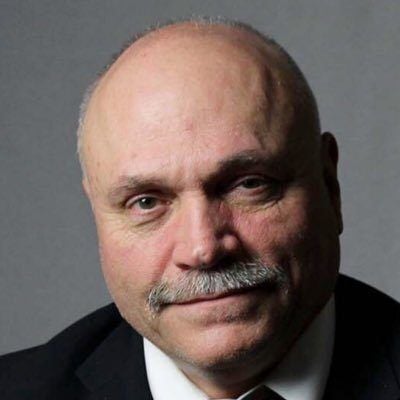
Lawmakers usually talk about what the General Assembly passed for the people. District 124 state Rep. Don Mayhew Friday took a bit different approach.
“We frequently talk about stuff that we've got passed, but it's worth talking about some of the things that we didn't get passed,” Mayhew said at the Rolla Lions Club Den gathering that included Reps. Tara Peters and Bennie Cook.
Regarding some of the legislation that was not passed, Mayhew noted that Senate Bill 190 had some ramifications beyond what it was meant for, which was a tax credit to senior citizens.
“But there was some other stuff in there, and one was a personal property tax and real estate tax credit that basically froze your assessment at 65. Well, the language wasn’t very clear on that, so the assessors had a problem with it,” he said. “I've seen numbers all over the place, but that's something we're going to have to go back and deal with.
“But it gives us a perfect opportunity to deal with it, because we didn't pass the one thing that everybody agreed that we needed to pass for the assessors. That was how you do valuations on personal property, specifically cars. So, essentially, what happened was, the Legislature in their infinite wisdom years ago included the word ‘NADA.’”
That past Legislature used the National Automobile Dealers Association value book in figuring out the worth of a car to assess taxes on it.
“Now NADA no longer exists Price Waterhouse bought them out, and they changed their name and their product to something totally different. Well, that necessitated us going back end and just making that simple little change. Right? So the assessors could progress with their job of assessing personal property,” he said.
The problem, according to Mayhew, is that when a legislator opens the door to fix one problem, all kinds of other action can take place. This NADA fix opened the door to more action on personal property taxes—eliminating them.
“Well, as you can well imagine, personal property tax is a pretty good campaign issue and all the proposals – schemes I call them – about changing personal property tax don’t make an allowance for making up that revenue somewhere else. Our counties still have to function, and they still take the same amount of money to function.”
So, there was a proposal to move all the personal property tax burden over on real estate owners, Mayhew said.
“Now, where I live over in Pulaski County, about half the people there don't own a house because they're only going to be there for two years (at Fort Leonard Wood). So they rent. The only thing that they pay taxes on is their car,” he said.
That legislation did not go through, so assessors are still faced with some difficulty, he said.
“That’s something we didn't get done,” he said. “Now the assessors have to do the exact same thing they did last year, which was you know, pull out the Ouija board or whatever trying to figure out the value of these things. So that one went down in flames.”
Other legislation that was not dealt with included initiative petition reform.
“IP reform died because of this sports betting thing,” he said. He said his talks with district voters indicate that sports betting has “not been a priority to anybody that I run across.”
There were some things that were passed that were “pretty important to this area.”
One is the employee stock option that will allow someone who owns a company, “when they’re selling it, if they sell 30% or more to the employees,” then they’re able to take that off of their capital gains debt at a much higher rate.”
That’s particularly good for Missouri’s technological companies.
“Instead of losing employees from our tech companies to other states, this gives us an incentive to keep those folks around,” he said.
Mayhew said he was not “a big fan” of the promises made by the governor regarding highway improvement, particularly Interstate 70, because the spending ignores other needs where help has been sought for many years, needs that are on a three-tiered list.
“The three projects the governor was talking about for the $859 million, not one of those projects was in the high priority unfunded needs. “Not in tier one, tier two or tier three. Certainly, the remainder of those projects that are going to be done on I-70 have not been in that either.”
Highway 63 has needs. Mayhew said there have been promises of four-lane driving along a significant portion of that highway “for 45 years.”
Mayhew, a civil engineer, said the cost of adding passing lanes, improving intersections and bypassing Freeburg where there is a land acquisition issue, was $35 million four years ago and now it is $50 million.
“My point was, and is, that if we're going to dedicate that much money to infrastructure, especially general revenue, then … take care of those things that we've already gone through the planning process on,” he said. “The $2.8 million would have fully funded tier one fully funded tier two and almost fully funded tier three of our high priority unfunded needs. Well, I hope cooler heads prevail.”
Mayhew noted the state budget has grown from $31 billion to $51 billion since he entered the House of Representatives five years ago.
“That’s a lot of money. Now, admittedly, a lot of that's from Uncle Sugar, a lot of that is federal dollars that we got … And if you look at the way government operates, there’s only one thing worse than not having enough money and that’s the government having too much money.”
Over the last two and one-half years, Missouri has added nearly a billion dollars of “brand new” general revenue spending, he said.
“The best year we’ve had had in the state of Missouri was my first year in the House of Representatives, and we had $125 million left over on the bottom line,” Mayhew said.
He predicted that “at the end of the last quarter of this year, we're going to see a downturn in the economy. That's going to be one of the weird ones where real estate probably is going to stay high. But then other components of the economy are going to see a big downturn.”
That’s why Missouri government needs to save some money instead of spending it so freely, Mayhew said.