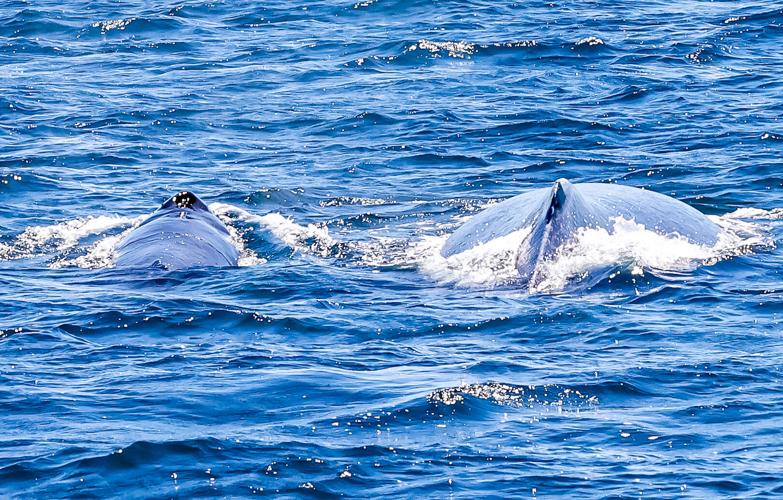
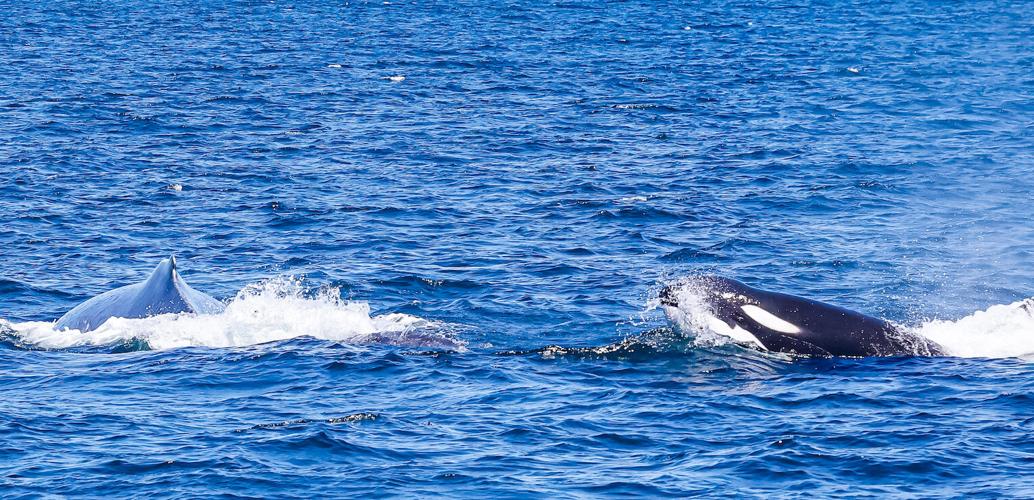
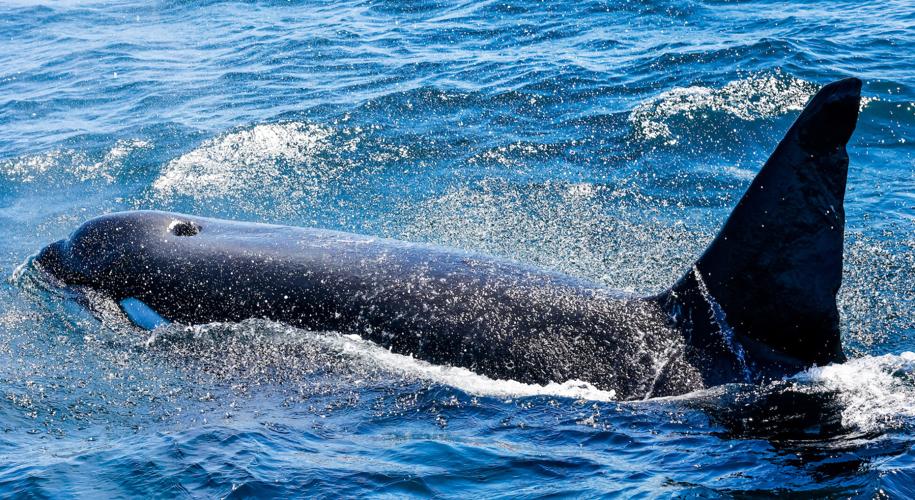
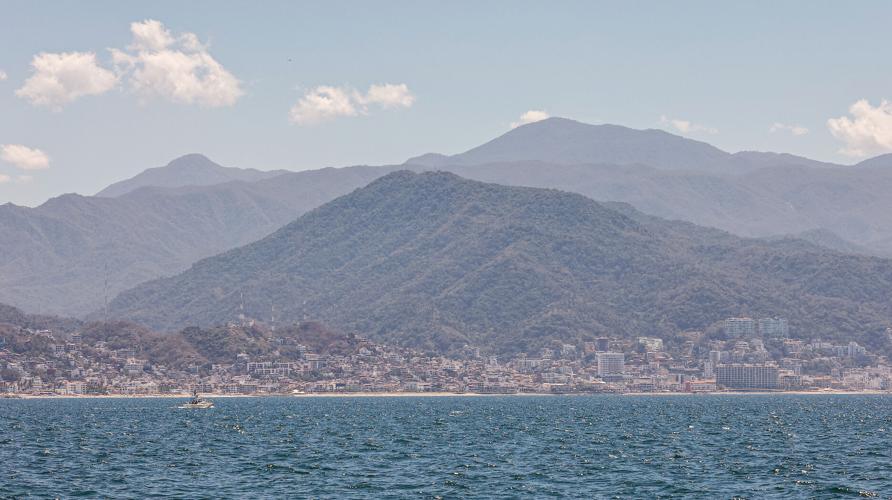
Orca adventure near Puerto Vallarta, Mexico. Video by Ben Johnson. Stills by Donald Dodd.
We set out at 8 a.m. March 17 from Marina Vallarta in the Aymar in hopes of seeing a few whales and catching a lot of fish. Little did we know that the day would provide an encounter with nature that, well, you would have to experience it first-hand to truly appreciate.
Like most winter days on the Bay of Banderas and in Puerto Vallarta, Mexico, it was in the low 80s with calm seas. We put the fishing lines out and had little luck in the first few hours. Then, the bonita hit. And hit. And hit. We caught about 30 of them and figured that was enough, so we took another route across the bay in hopes of seeing one of the many humpback whales that the bay plays host to each winter.
We finally spotted one way off in the distance. It kept breaching – a sight to behold – so Captain David had an easy time navigating us the half mile or so to get closer.
“Thar she blows,” said Jerry as he kept an eye on the horizon and the humpback.
When we got close enough for a good look, we discovered that the whale was a mother, and her calf was swimming right alongside her. Mom was breaching a lot as we got closer, and we later learned that humpback whales sometimes breach to communicate, as the sounds of their gigantic splashes can be heard underwater for long distances. In this case, we figured mom’s breaching was a warning signal.
As we watched mom and calf swim side by side, suddenly an orca – sometimes referred to as killer whales – charged toward the calf, the orca’s shiny black back glistening and its white chest completely out of the water. Thus began the encounter I referred to in the lede of this column.
Mom did her best to stay between the calf and the orca. Adult humpbacks average 49 feet in length and weigh approximately 35 tons. Orcas average 30 feet long and weigh four to eight tons. This was what you might call a heavyweight fight, but we weren’t treated to an Ali-Frazier remake of the Thrilla in Manila.
Maybe the orca was intimidated. Maybe it wasn’t really hungry enough to go fin to fin with a 35-ton momma. For whatever the reason, after a few minutes of stalking with occasional impressive and breathtaking charges at the female and calf, the orca walked away, or in this case swam away. That’s when it got really interesting.
The orca headed straight for our boat, it’s nearly six-foot dorsal fin looking like something out of a Jaws movie. I remembered a National Geographic special I watched years ago about an orca that launched completely out of the water to strike a seal minding its own business on a big rock. The force of the orca’s powerful lunge knocked the seal off the rock and into the water, and you can envision the rest of the story. Orcas find seal meat tasty.
Luckily we were in a 42-foot Sea Ray, so I wasn’t worried about the orca sinking us, but I did remember that National Geographic special and warned Lizzy not to put her legs over the side of the boat. Lizzy doesn’t look much like a seal, but….
The orca got closer and closer. I kept my Canon R6 with a 70-200 f2.8 at the ready, hoping it would get close enough for a good shot. It did.
The orca surfaced 40 feet or so from the boat, its eyes curiously focused on our boat and its 15 occupants. And it kept coming. Across the bow, down the left side, across the stern and up the right side. Then the orca made the same circuit again, this time under the bow, resurfacing on the left of the boat.
All the while, my R6 clicked and clicked and everybody with a cell phone – which was everybody – took videos of the close encounter of the orca kind.
“Wow,” Fred exclaimed. That’s about the only word we muttered for the next hour.
Donald Dodd
Reagan, normally a quiet and reserved teenager – at least around us old people – had quite a reaction as the orca circled the bow where she was sitting. She was close enough to spit on it if she’d of had a mind to. The look on her face in the video says it all.
It was the experience of a lifetime, you might say. First mate Michael, old enough to have spent a few seasons on the sea, said he’d never seen an orca in the bay. He sat in front of Reagan on the bow and videoed the orca as it circled his cousin’s boat.
Finally the orca swam away, that big dorsal fin disappearing to the west.
“Wow,” Fred exclaimed again.
Yes, wow.
That night as my curiosity was peaked, I spent an hour or more reading about orcas. As it turns out, they are not the seal-hammering, violent predators I saw on the National Geographic show. At least not all the time. Experts say orcas, members of the dolphin family, are actually highly intelligent, social animals that love interaction with humans. But I still wouldn’t hang my feet over the side of the boat when one is around. It might be a member of the dolphin family, but this thing was no Flipper.
Anyway, I also read that orcas might be the most widely distributed mammal in the world – not including us – and they inhabit every ocean. They eat fish, sea lions and seals, and the occasional whale when they work up the guts to do it. An adult orca consumes an average of 500 pounds of food a day. One of their favorite foods is the liver of a great white shark. They kill the shark and only eat the liver.
I learned a lot more, but those are the things that stick out the most. However, reading all about orcas on the internet and looking at them on TV don’t come close to the wow factor you get as you watch one socializing with you and your friends as it circles the boat.