AUTHOR’S NOTE: This article was first published in 2001. It has been updated. My co-author was Naomi Shelden. She loved Waynesville and we enjoyed working on this story together. She died in 2021. I dedicate this revision to her.
...





AUTHOR’S NOTE: This article was first published in 2001. It has been updated. My co-author was Naomi Shelden. She loved Waynesville and we enjoyed working on this story together. She died in 2021. I dedicate this revision to her.
...
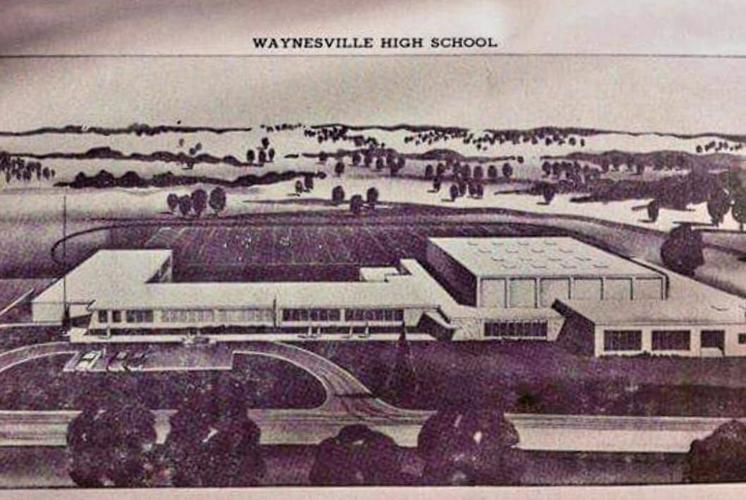
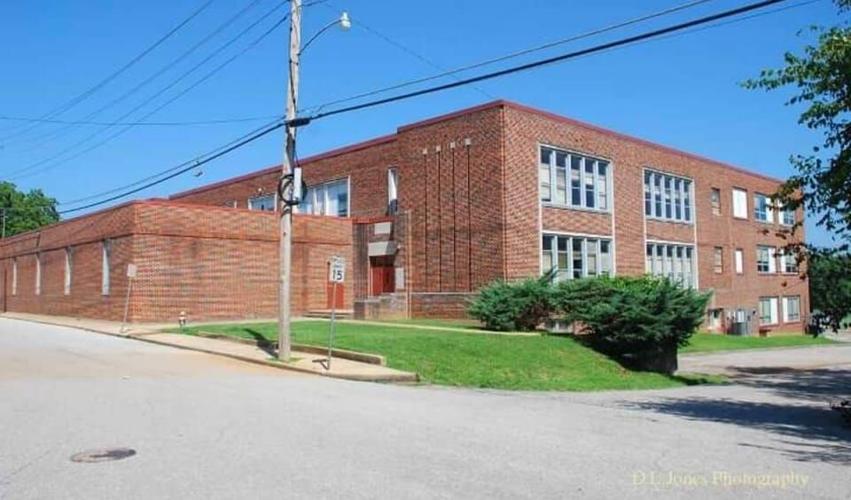
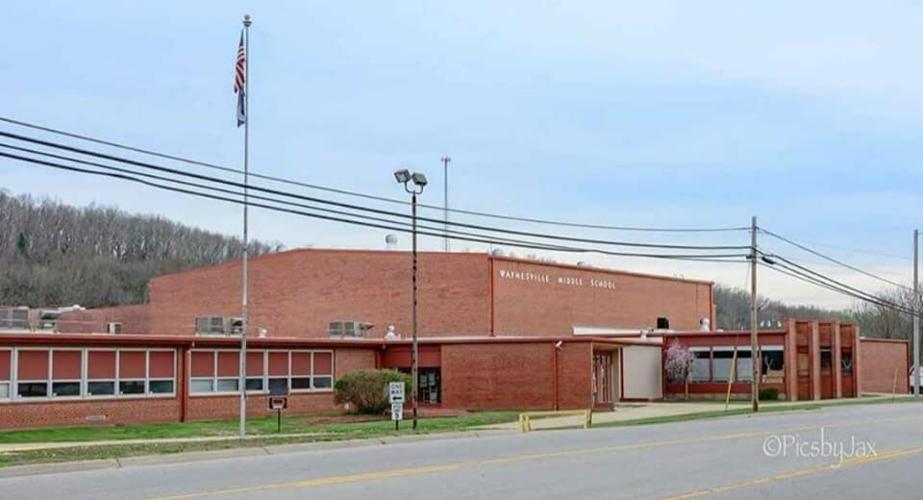
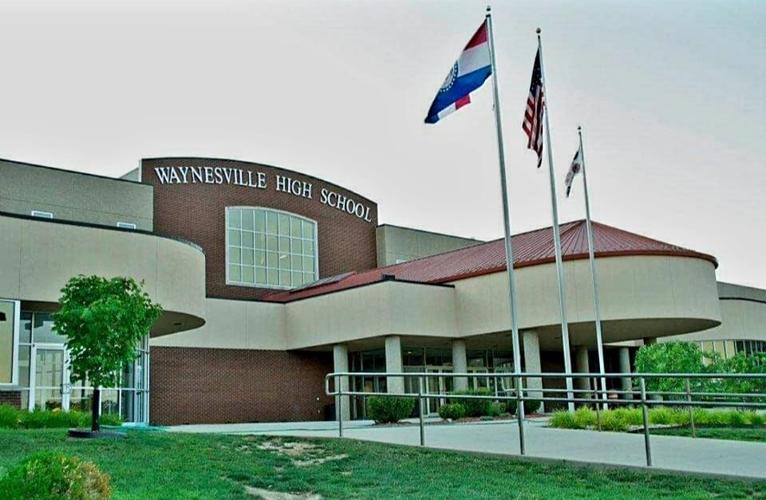
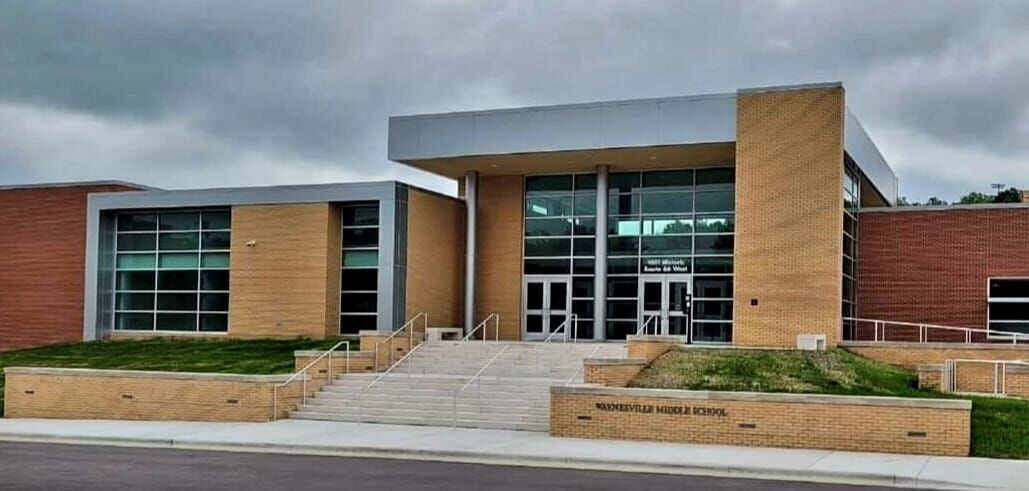
The Waynesville High School class of 1960 produced solid citizens: teachers, doctors, builders, engineers, postmasters, military officers, law enforcement personnel, housewives, businessmen, city administrators and computer specialists. In the summer of 2000, the class members gathered in Waynesville for their 40th reunion and remembered an exciting year in Pulaski County history. They were the first senior class in a new high school building in 1959. The newness made them feel special. Their community had responded to their educational needs. Today, we know that “new high school building” as the renovated Waynesville Middle School. It is the building I taught American history in for 15 years. In 2003, a new Waynesville High School was built on the hill above the 1959 High School. The ’59 building had served as our high school for 54 years.
The push for the new high school building began in 1954. The Waynesville Board of Education made an application to the Missouri Department of Elementary and Secondary Education for a new senior high school building. And in October 1955, the Pulaski County Democrat took a public and firm stand in support of a new senior high school building to be built in West Waynesville, proclaiming, “The citizens of the Waynesville School District can provide their young people for many years to come with a superior high school program. The responsibility is ours!” The newspaper stated two main reasons for its support: growth of student population and ensuring the permanency of Fort Leonard Wood. Bond issues were very common and used to build any public facility. The state would issue bonds for a certain amount of time, usually 10 to 20 years, depending on the cost of the project. Taxpayers would pay a special bond tax every year with their annual county taxes. Bond issues were very hard to pass in those days, and even more so today.
In 1954, the Fort Leonard Wood was expanding at an unrelenting pace and was on its way to being named a permanent installation. The population of Pulaski County in 1940 was 10,775 and by 1960, it had increased to 46,567. The community had to respond to the growth.
By 1955, the school district population was 2000. West Elementary (today’s Administration building), for example, housed grades 1-4. My husband, Paul, attended there. The kindergarten classes were held at the First Baptist Church. Of the 75 teachers then employed by the Waynesville District, 14 of them taught at the West Elementary building. Some classes contained as many as 40 students.
In 1955 the public voted down the new high school plans twice. The first of the bond issue votes in November saw 291 casting votes for the issue and 394 against. The Waynesville school board, under the leadership of Dr. R. O. DeWitt, voted to call a special election in December and that vote fell 30 votes short of the 2/3 majority needed. The Democrat however, referred to the vote as a “moral victory”.
Opposition to the bond issue was obviously present. One local man showed his displeasure with the plans for a track and football field by saying, “If those kids want to run, let them run to the Roubidoux and back.” Tom Shockley, a Waynesville businessman, was originally opposed to the new building. Waynesville varsity basketball coach Kenny Foster felt Shockley’s eventual support for the project helped shift public support toward the construction. Foster recalled, “At the first home game, we had a special Lazy Boy chair for Mr. Shockley to sit in.”
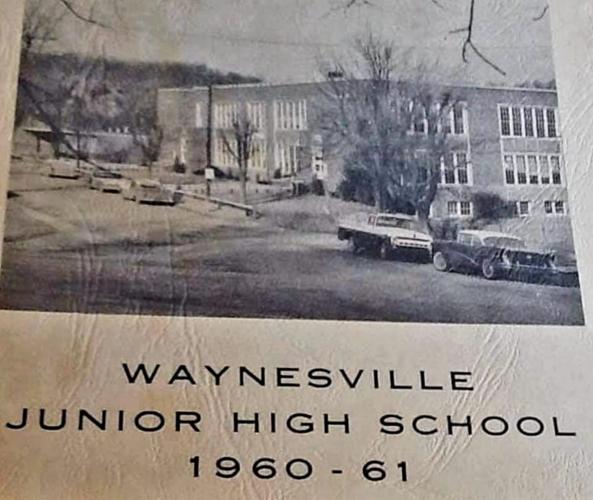
In September 1957, the school board opened the Roubidoux Elementary School (the original building in West Waynesville where the 1960 high school was eventually constructed) to alleviate the growth. Since the early failures at the polls, the future plan was for the Roubidoux Elementary School to be remodeled and converted to a senior high school when another elementary school was built on Fort Leonard Wood. The Waynesville Senior High School had been housed for years in what is now the Pulaski County Justice Center. When the 1959 high school was built, that building was converted to the Waynesville Junior High School.
It was obvious something had to be done. The student population was bursting at the seams. Senior Tom Tinsley, a former Waynesville city administrator, observed, “We were so crowded, we were having driver’s ed in the boiler room.”
Jack Garzelli taught social studies at the high school, “I needed a room to teach in. We had no air conditioning, of course, and temperatures would reach 100 degrees.” Garzelli recalled,” There was no cafeteria at the high school. We would bus students to the West Elementary School, where Mae Hensley would feed us.”
Art Anderson, a local businessman, served on the school board during this time. The Waynesville School Board worked long and hard on the issue and Anderson had long supported a new high school building. He said, “There was so much business to conduct that many times the board would see the sun come up.” By 1958 many of the early opponents of the construction had changed their minds concerning the construction because of the threat of a high school being built on Fort Leonard Wood and several leading businessmen signed petitions to show their support for the bond issue.
A new vote was taken in February 1958, passing with an 8 to 1 margin, 1,140 for the project and 159 votes against. A $250,000 bond was issued and then matched by $256,000 of federal funds, which were earmarked for the remodeling of the old high school building in downtown to house the Waynesville Junior High School.
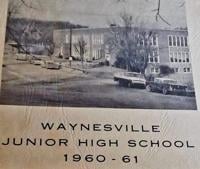
The Democrat reported the bond issue victory by saying, “. . . citizens of this area may sometimes see differently on issues, but when the time is right, when the issue is important enough and when the welfare of our children is at stake, they will unite in full force to give their approval.”
The new high school was placed in the Roubidoux Elementary School in West Waynesville in 1959. The nine original rooms were remodeled to house primarily English, math, and social studies classes. Five other classrooms were added; an art room, driver’s training classroom, home economics, music and industrial arts rooms were built, along with a library, special education rooms and a modern gymnasium. On the basement level, the cafeteria was expanded and three classrooms were added. Garzelli described the new building as a “piecemeal school”. But, he explained, “A poor man has to do with what he has! The board had to create a school with the money they had.” He was just happy to be in a bigger building.
That year, Kenny Foster was beginning his fourth year of teaching and coaching basketball at Waynesville High School. That year was the beginning of a larger family for Kenny and Sue, as their son, Anthony, was born. The theme of the 1960 yearbook was “The Old and the New” and for the Foster family, the theme could not have been more appropriate. For Foster, the most exciting feature of the new building was the new gymnasium. He recalls, “Everyone was enthused. We had a new gymnasium. We had a new baseball field and locker rooms. Today, we thought the middle school building was inadequate, but in 1958, it was terrible. We were so excited to be moving to a much bigger building.”
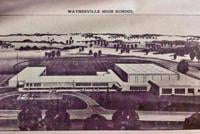
As a teacher, Foster saw many innovations added to the facility and the curriculum in 1959-60. Waynesville Senior High School now had the first driver’s education simulator in the state of Missouri. Senior Christine Rigsby Rowell was struck by the spacious and well-lit art room. Senior Mike Dodds, former Waynesville postmaster, remembered more classes being offered. During the ‘59-’60 school year, Mrs. Vivian Humphrey taught Trigonometry for the first time and an entire year of Advanced Algebra was offered.
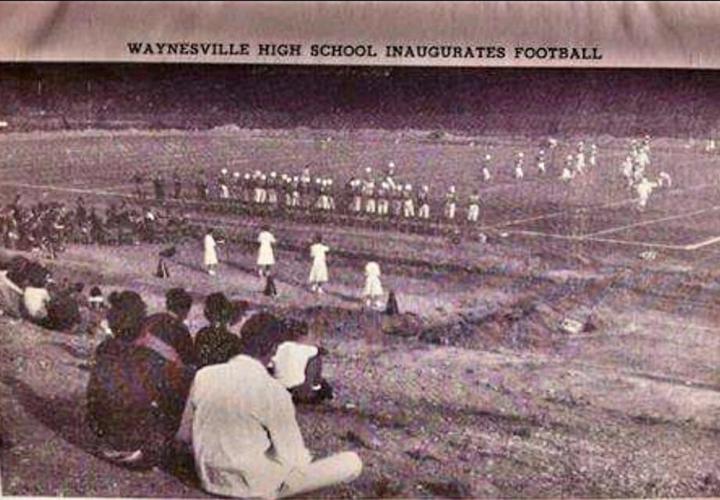
Like many “town kids”, Dodds recalled the new high school building being surrounded by open fields he had played in as a child. Senior Midge Mooney Bohrer added, “Our new school was so far out in the country, we even had a parking lot. I didn’t have a car, but I remember being impressed with that parking lot. We had a gym that would seat the entire student body. It was impressive that we now had a football team with actual uniforms and a football field.” Rowell added, “There were no bleachers at the field. We sat on blankets and enjoyed the game.”
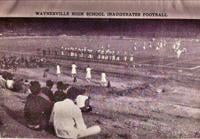
Bohrer recalled her apprehension at moving into the new high school building in 1959, “Moving to a new high school as a senior seemed so traumatic at the time. It meant leaving a school we had been attending for at least six years.” Senior Tinsley was also apprehensive about the move. “We had grown up in the old building. We were very close. When we moved, it seemed we actually lost contact with friends.” Rowell added, “We were sad at first. We were leaving friends and familiar surroundings.” Her classmate, Bohrer, explained, “The new high school was such a contrast to the old. It seemed a sprawling mansion, with fresh paint and shiny tile floors, where we might not see close friends for hours at a time.”
As that magical year ended for the 86 seniors, Bohrer summed up the feelings of many of her classmates, “During the fall, things fell into place and as the year ended, I felt very fortunate to graduate from such a facility.” The community had responded to the educational needs of its students, and the move to the new high school became the highlight of the year, making special memories for the class of 1960.
But the story continued for the class of 1960 and the citizens involved in building the new high school. The seniors of that year began their lives and careers in our community and many of them, beyond Pulaski County. Midge Mooney Bohrer, Christina Rigsby Rowell, Tom Tinsley and Mike Dodds still live in Waynesville today. They have been active in civic affairs and raised families.
Kenny Foster taught school for 11 years and then became the safety officer at Fort Wood. He retired in 1993 and is still active, fishing and volunteering at his church. In 1978, Coach Foster’s son Anthony graduated from Waynesville High School. Anthony died in 2022. In 1980 school board member Art Anderson witnessed the burning of the high school bonds. He served many years as a Waynesville City Councilman. Art died in 2017.
Board of Education President Dr. R.O. DeWitt, practiced medicine in Waynesville for many more years, dying in 1984. Math teacher Vivian Humphrey retired from teaching and died in 2001. And businessman Tom Shockley continued his civic leadership the rest of his life, dying in 1976. In 1987, after 30 years of teaching in public schools, Jack Garzelli retired and became an author. He died in 2021.
Today, history repeats itself as the community continues to experience growth, with a student population of 5,800, and once again, is faced with meeting the needs of its youth. A new high school on the hill above the 1959 building was opened in 2003. The old high school building in West Waynesville was renovated and is now serving as the Waynesville Middle School. The original Waynesville High School in the downtown area was demolished and the site now serves as the home of the Pulaski County Justice Center.
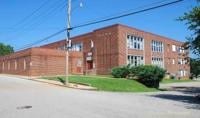
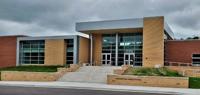
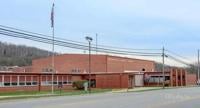
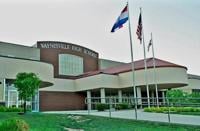
Over the years, progress (the current high school, renovated middle school, etc.) has been made possible by the positive response of residents to keep the B-2 Heavily Impacted Aid monies we receive because of our large military population. This year 70% of our student population is military related. That money is reserved for building and capital improvements. The federal B-2 monies have made it possible for the people of the Waynesville School District to avoid bond issues on any new construction, renovation or improvement project. Much like the citizens of 1959, our community continues to support education and want the best facilities for their students.


Sorry, an error occurred.
Already Subscribed!
Cancel anytime
Thank you .
Your account has been registered, and you are now logged in.
Check your email for details.
Submitting this form below will send a message to your email with a link to change your password.
An email message containing instructions on how to reset your password has been sent to the email address listed on your account.
No promotional rates found.
Secure & Encrypted
Thank you.
Your gift purchase was successful! Your purchase was successful, and you are now logged in.
| Rate: | |
| Begins: | |
| Transaction ID: |
A receipt was sent to your email.