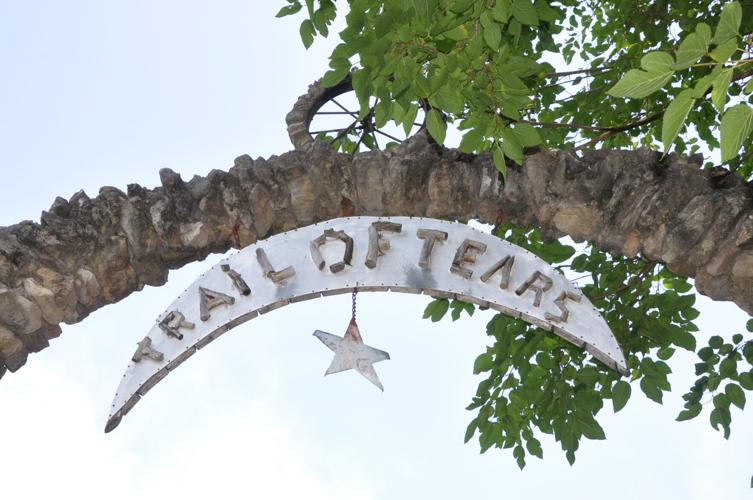
Some believe all things happen for a reason, and a power in the sun, moon and stars seem to have brought like-minded people together over the past 80 years to learn, grow and create on sacred ground with a purpose to preserve the Trail of Tears Memorial on Historic Route 66 in Jerome, 21250 State Highway D.
It’s a sanctuary. It’s a healing garden. It is something of wonder.
A belief in positive energy, a fierce drive, passion and understanding of what it all stands for, has led property owner Marie “M.J.” Ryberg, a retired lieutenant colonel, to pour her heart, and her own funds, into restoring and building on the dream of her predecessor and teacher, Larry Baggett.
Baggett passed away in 2003 and his ashes were spread on a hilltop where wildflowers now grow. His spirit remains through the art he created as a tribute to those who were there before him.
“This all was Sioux headquarters hundreds of years ago, Ryberg said.
She served our country for 22 years before retiring from the U.S. Army, and 10 years studying with Baggett. He taught her about the importance of the balance of nature and all living things.
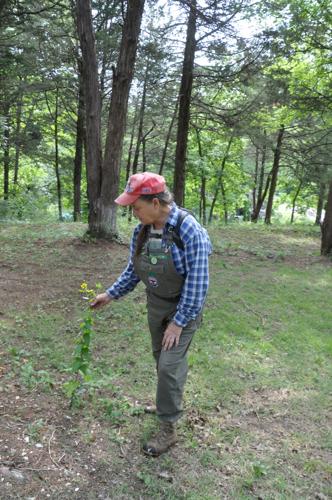
She met with the Pulaski County Weekly recently for a walking tour of the memorial and an explanation of how it all began.
For the past 20 years, since Ryberg purchased his land, she has strived to follow in the footsteps of Baggett. He had owned the property for 60 years prior for a combined 80-year effort to create what is one of the most wonderous memorial tributes to a dark time in American history which now radiates with a spiritual light for the future.
“He's the one that designed it as a tribute to the 1,000s of Native Americans that died on the trail,” Ryberg said. “It took him 40 years to do all this stonework. And he did it all by himself.”
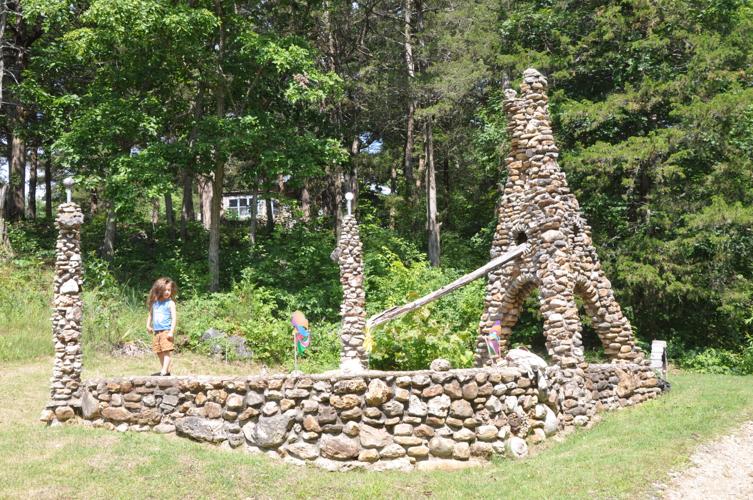
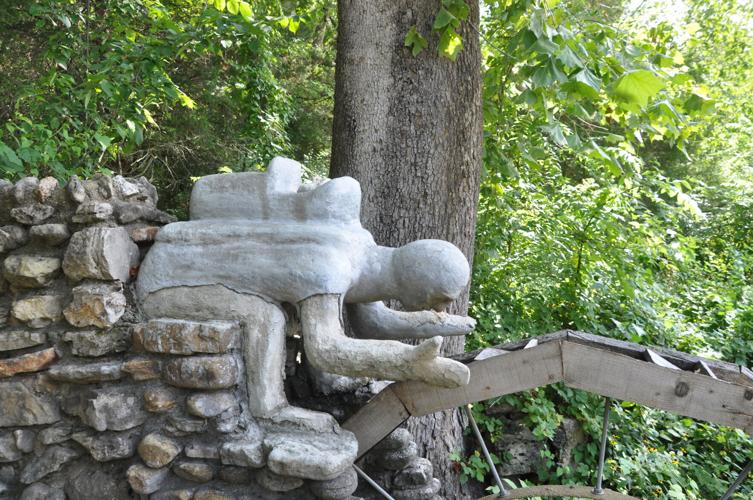
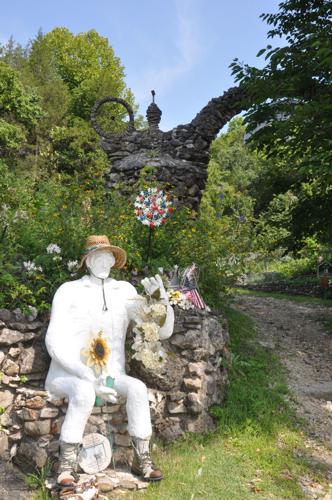
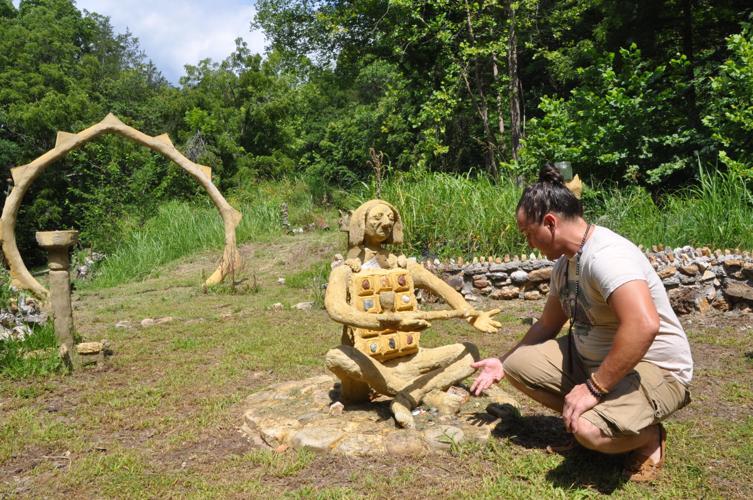
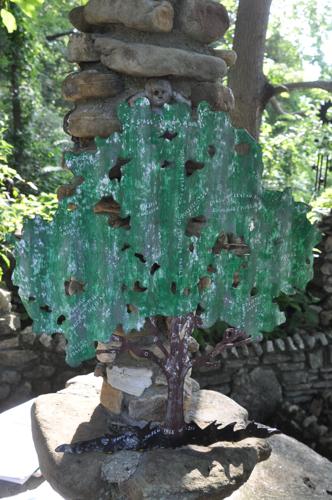
With his own hands, Baggett, who had been from St. Louis before he purchased the property in Jerome, used native stone he found on the property, plus special rocks and crystals given to him, to build his monuments. He made statues, visual interpretations of legends, plus a self-portrait that sits at the entryway and greets all who visit, still wearing his boots.
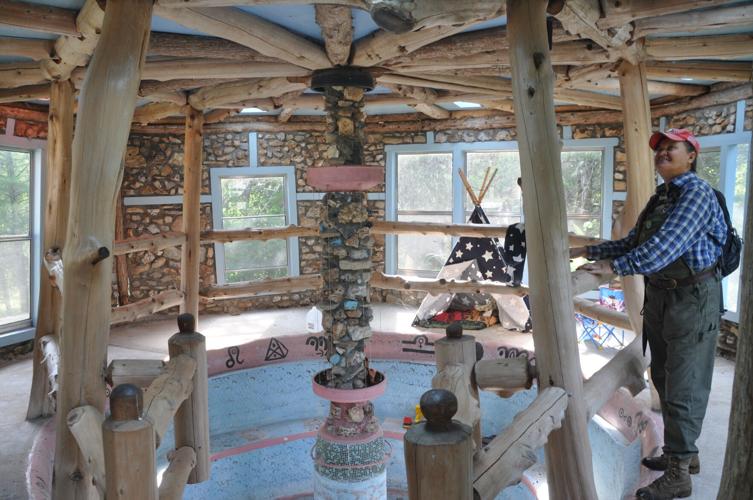
Using wood he harvested on the property and native stone, he built a large home he shared with his wife and a purification building with a seven-foot pool he used for meditation. Nails on the wall remain where he hung his tobacco to dry.
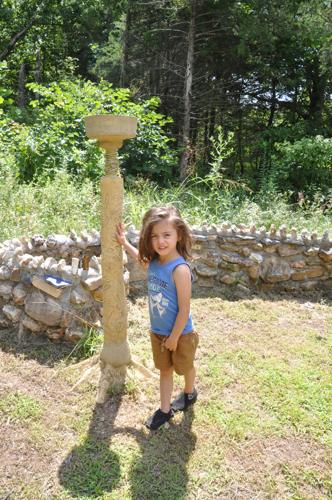
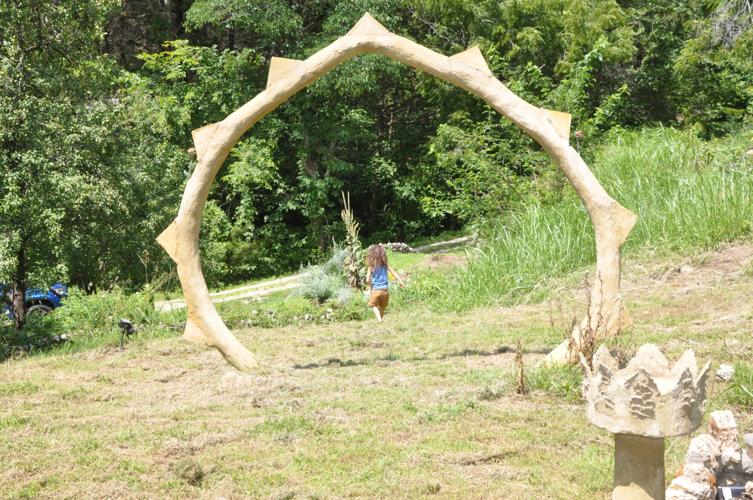
Baggett designed around 50 intricate vegetable, flower and herb gardens outlined with rock formations he created, some made to resemble moon phases, and at the main entrance he built an archway high in the sky welcoming all to pass.
Part of Baggett’s plan when he found out from doctors that he only had a few months to live due to an extreme case of diabetes, was to turn the home and property into a campground so his wife would have a source of income, Ryberg said. He created elaborate shower rooms and built several outdoor fireplaces for campsites.
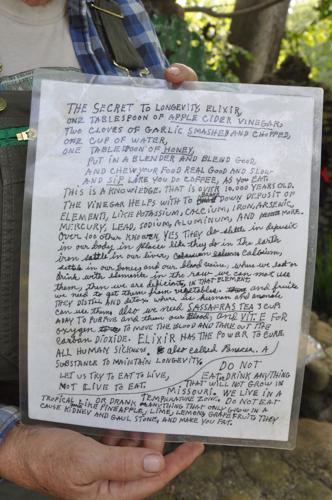
After he discovered a natural remedy for his illness, Jerusalem artichoke, a Native American potato, he healed himself and outlived his doctor’s prediction of 18 months, Ryberg said. Because his wife passed before him, the public campground never materialized, however, he did continue his original passion of honoring the memory of the Native Americans who lost their lives as they traveled the Trail of Tears.
Ryberg’s labor of love has pushed her to restore Baggett’s original work in the healing gardens and memorial and to keep making improvements. She’s made it her life’s work to continue to study what she learned from him, and go beyond, to understand the trail history and importance of the land, and to hone her skills to help the native plants and animals thrive.
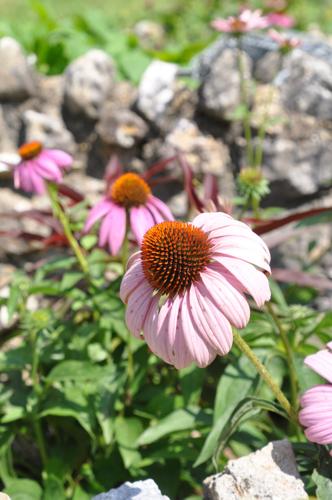
Beautiful gardens overflow with produce and there is a display of wildflowers which dot the path with a multitude of colors leading to a spiritual destination.
As renovations are underway, the main part of the tour is at the lower level, but Ryberg has plans to eventually add a museum and educational center at the top of the hill where Baggett’s former home and meditation building stand.
The memorial is open 10 a.m. to 5 p.m. Saturdays and Sundays.
‘Rockman’ creates from a vision
“I’m here to help,” Chris “Rockman” Richardson said to Ryberg as she was working alone one day on the property.
Richardson’s family has owned property across the highway from Ryberg since 1999.
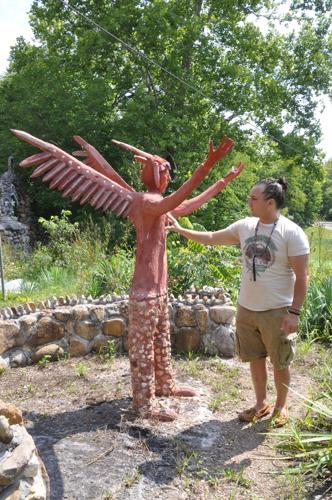
“I had seen her working alone a lot,” he said. He described how he saw a vision to create the statue of Chief Joseph. Since then, he has spent hundreds of hours creating symbolic and intricate work on the property, all with divine meaning he believes were in tune to Baggett’s vision.
Richardson created two of the memorial’s largest features, a statue of Chief Joseph and Geronimo, an Apache military leader and medicine man.
Ryberg said Richardson had no experience in stonework but has spent the better part of a decade repairing damage to the aging structures and has added his own unique style of artwork seamlessly incorporated and in the same vein as Baggett’s for all to enjoy.
“He put it all together,” Ryberg said of Richardson’s work. “It was amazing.”
Other volunteers in the area, including a group from Fort Leonard Wood, help with the upkeep, such as weed eating.
“Little by little, we’re getting things done,” Richardson told the Focus.
With all the hard work that has been completed by Ryberg and Richardson, there is still much more to be done and lots of continued maintenance of the property.
Ryberg hopes to establish a museum and educational center within the next year.