This week, Americans will celebrate. We will eat heaps of potato salad and look to the sky.
Each July 4, no matter the political climate and frustrations, I’m proud of the fact that we remain unwaveringly free. For the day, beneath billows of red, white and blue, our nation puts arguing on hold and watches fireworks dance off a spectrum of faces.
During these annual light shows my mind always flutters to immigration: something I would not be here without. See, I was born in a country where I am free to do, be, say and dream whatever I want. My father was not.
In the 1970s, he came to America under the arms of his parents, who just wanted better lives for their children. A civil war was ravaging the Middle East and Lebanon and was growing increasingly dangerous.
Grandpa (Jidu in Arabic) and Grandma (Teta) are two people of few words, even fewer in English. But I know how much Independence Day means to them. Each Fourth of July, they host a family cookout. Jidu spends the afternoon quietly observing the next generation of his family, who will never have to do what he had to. Teta presents mounds of food, all homemade of course, to grandchildren she’s been proud of since conception.
Independence Day is a reminder of their bravery, because bravery is what it takes to be an immigrant.
With nothing more than their four children, one carry-on and infinite amounts of hope, Jidu and Teta left their remote hills of Lebanon, leaving behind all they had ever known. As a unit, they made their first trip outside the Beqaa Valley and rode their first plane. The United States of America was as tangible as a dream, a foreign land of opportunity where they were told they wouldn’t have to fear for their children’s safety.
My family of humble olive farmers landed in urban Cleveland and were sponsored by another family member who made the same journey years before. They all obtained green cards and, eventually, citizenship.
Today, Jidu spends his days harvesting the same crops he taught my dad to plant back in Lebanon. His backyard is an oasis lined with fig trees and canopied by grape vines. His soil-stained hands, though covered in 93-year-old wrinkles, still produce the bounties of life each season. I have him to thank for my green thumb.
And Teta remains a fixture in the thriving Lebanese community she helped create. She still takes Jidu’s annual harvest and turns it into the most beautiful feasts for her friends and family. She pours her pride for our successes into her tabbouleh then adds an elegant touch of bulgar wheat. She shows her love for us by meticulously foraging the dandelion fields near her house and turning these weeds into delicious salad dressed with oil and pine nuts (hindbeh). I have her to thank for my love of cooking.
I got to focus on these and so many other beautiful parts of my heritage. I never had to hear gunshots growing up. I never had to smother my dreams. I never had to travel to survive, just for leisure. Jidu and Teta, two of the many brave immigrants who live amongst us, are who I have to thank for it all.
That’s why it pains me so much to know how negatively some natural-born Americans view immigration. Immigrants are simply pursuing a better life, only to land here and be met with rejection, racism and violence.
People born in less fortunate countries, fall asleep to bedtime stories of “America the Free”, where they can play outside and feed their families. Our nation is desirable because it is free, and freedom isn’t a finite resource. We will never run out of it.
So why not share?
It is easy to reject those who want to settle where we have settled. It might seem safe to put up walls and brand those from other lands with words like “criminal”, “terrorist” or “alien”. But immigrants are nothing to fear. There was nothing malicious about Jidu and Teta’s intentions to become Americans the same way there isn’t malice behind present-day immigrants.
Like my grandparents, immigrants wouldn’t make such precarious journeys if these journeys weren’t vital. They do this not to steal our jobs or drain our nation of resources, but because their lives are threatened and they need to secure a safe future for themselves and their family.
Since their long journey decades ago, Jidu and Teta have settled into simplicity and thank God for their freedom. They don’t ask for handouts. They don’t demand anything. They wake up every day and are grateful for the safety America affords them. That safety was all they needed to achieve their biggest dream: that their descendants are now living free from the dangers they were born into.
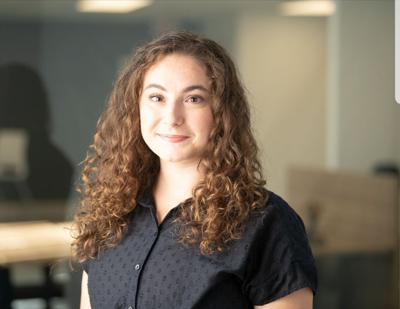
ALL ABOUT SAM: Funny story but true. Samantha Karam, Sam for short, applied for part-time work at The Salem News. Wrote Sammy: “My name is Sam, and I'm a photographer who recently relocated to the Salem area. I wanted to reach out and see if you had opportunities for stringers or freelancers.” The Salem News staff was ecstatic, because she is not only an accomplished photographer but an experienced writer. Uh-oh. As it turns out, Sam had recently moved to the Salem, Massachusetts, area. But among the samples of her writing was this column from the heart on immigration, and she agreed to let us share it with our readers during the Fourth of July holiday.
-Donald Dodd, publisher